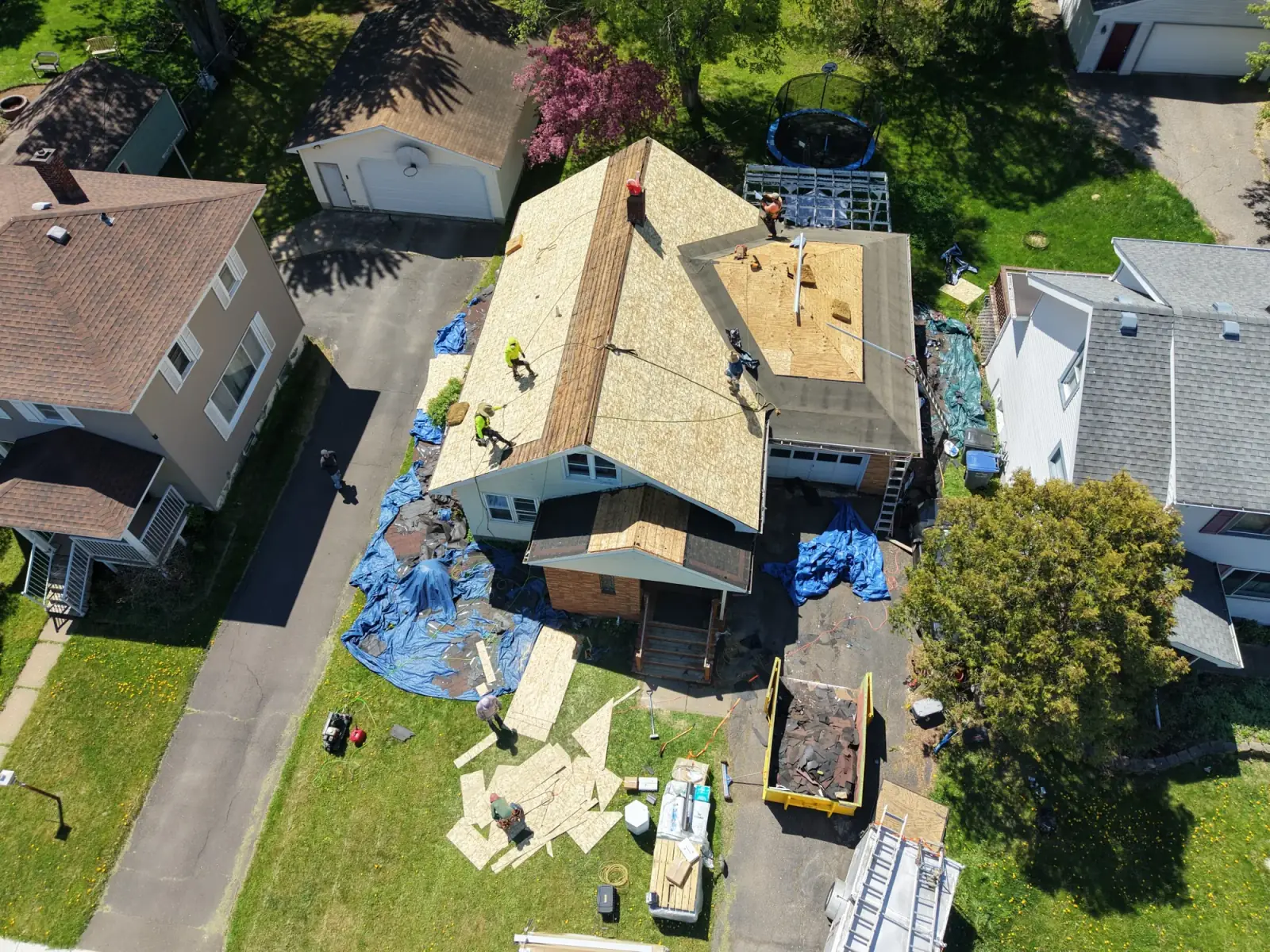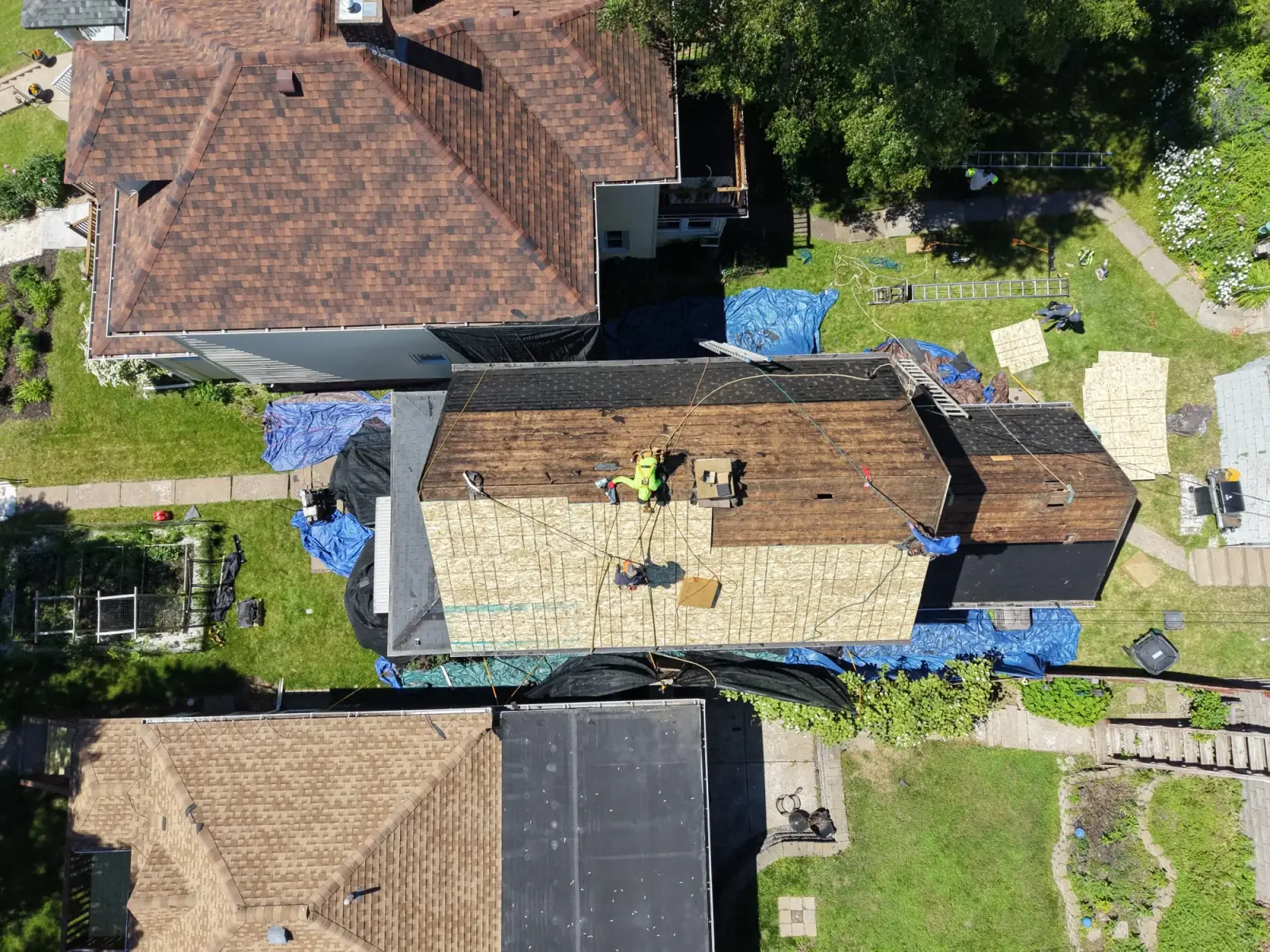
Short answer: yes. Roofs get replaced through Duluth winters all the time, and a roof put on in January can last just as long as one put on in July. But cold weather changes how the work has to be done. A crew that roofs the same way in December as it does in June can leave you with problems that don't show up until spring.
Why a winter roof is a different job
Asphalt shingles are designed to seal themselves down. Each one has a strip of adhesive that softens in the sun and glues it to the shingle below, and that bond is what keeps wind from getting under the edges. It depends on warmth. On a cloudy 15-degree day with wind coming off the lake, it isn't going to happen on its own.
Malarkey, one of the shingle brands we install, has separate instructions for roofing below 40°F. Here's what they come down to:
- Hand-sealing. When it's too cold for the sun to do the job, the crew seals each shingle by hand with dabs of roofing cement underneath. Malarkey's wind warranty only covers shingles that are sealed, whether by the sun or by hand.
- Warm, flat shingles. Cold shingles are stiff and can crack when they're bent or nailed. Materials get stored somewhere heated before they go up, and a cracked shingle gets thrown out, not installed.
- Nail gun pressure. A nail gun set for a cold morning starts driving nails too deep once the sun warms the roof, and a nail driven too deep doesn't hold the shingle properly. The pressure gets checked and adjusted through the day.
- A waterproof layer that stays put. The peel-and-stick layer that goes under the shingles doesn't stick as well in the cold or on a damp surface, so it may need to be fastened down until the shingles go on.
Why sealing matters more on a Duluth hillside
Duluth climbs roughly 800 feet from the lake to the top of the hill, and wind exposure changes a lot along the way. Homes up the hill in neighborhoods like Duluth Heights and Piedmont take a steady northwest wind all winter. Wind doesn't lift a roof from the middle. It gets under an edge first, usually at a corner, along the peak or down the sides, and peels from there. An unsealed shingle is exactly what it's looking for. That's why hand-sealing isn't optional on a winter job here.
Older homes add another wrinkle. Much of Duluth's housing was built before 1940, and tearing off those roofs often turns up several layers of old shingles with soft, rotted boards underneath. That's manageable in any season, but in winter it means leaving enough daylight to replace the bad boards and get them covered before dark.
Snow, ice and a dry roof deck
On any roof replacement, the old shingles come off and the roof deck, the layer of plywood or boards they're nailed to, gets inspected before anything new goes down. In winter that also means clearing snow from the section being worked on and making sure no ice or frost is left on the wood. Covering a wet or frosty roof deck traps that moisture under the new roof, where it has nowhere to go.
The short days matter too. The crew only tears off as much as it can cover back up before dark, so a winter replacement often takes longer than the same roof would in summer. And since frost is hard to see on a gray day, a careful crew works at whatever pace the roof safely allows.
When it makes sense to replace a roof in winter
- You have a leak that won't wait. A January leak won't fix itself by spring, and every week of water soaking into the insulation and roof deck makes the job bigger.
- The roof is coming apart. Shingles blowing off in every storm, bare sections or a sagging spot mean the roof is failing faster than it can be patched.
- You're on a deadline. Selling the house, or a project that can't start until the roof is done, may not leave room to wait.
- Scheduling is easier. Winter is a quieter season for roofing, so start dates are often more flexible than in the summer rush.
When it's smarter to wait for spring
- The roof is old but still dry. Curling shingles and bare spots where the gritty top coating has worn off mean a roof is near the end of its life, not that it has to come off this week. Booking it for spring gets you the easiest conditions for the job.
- The real problem is ice dams. If water only comes in along the bottom edge of the roof during a thaw, a new roof alone won't fix it. That's an attic heat problem, and our post on why ice dams form and how to stop them explains how to tell.
- The damage is small and contained. A few missing shingles or a leak at one chimney or vent can often be patched to get you through to spring.
Questions to ask before you book a winter roof
- How will the shingles be sealed if the sun won't do it?
- Where are the materials stored before they go on the roof?
- How much of the roof will be torn off at a time, and how is it covered overnight?
- What happens to the schedule if it snows partway through?
A contractor who roofs here every winter will have a ready answer for each one. If they don't, that tells you something too. Our guide to vetting a roofing contractor covers the rest of what to ask, and our post on roofing built for Duluth winter weather explains which parts of a roof actually decide how long it lasts.
If your roof is leaking now or you're not sure it will make it to spring, call Covenant Builders at (218) 590-1293 or request a free estimate. We'll look at the roof and tell you straight whether it needs to come off now or can wait. We're based in Saginaw and replace roofs throughout Duluth, from Lakeside to West Duluth.
Related
- Roofing
Full roof replacement built for heavy snow load, ice dams and freeze-thaw cycles.
- All services in Duluth, MN
Steep lots, exposed hillsides and some of the oldest housing stock in the region.