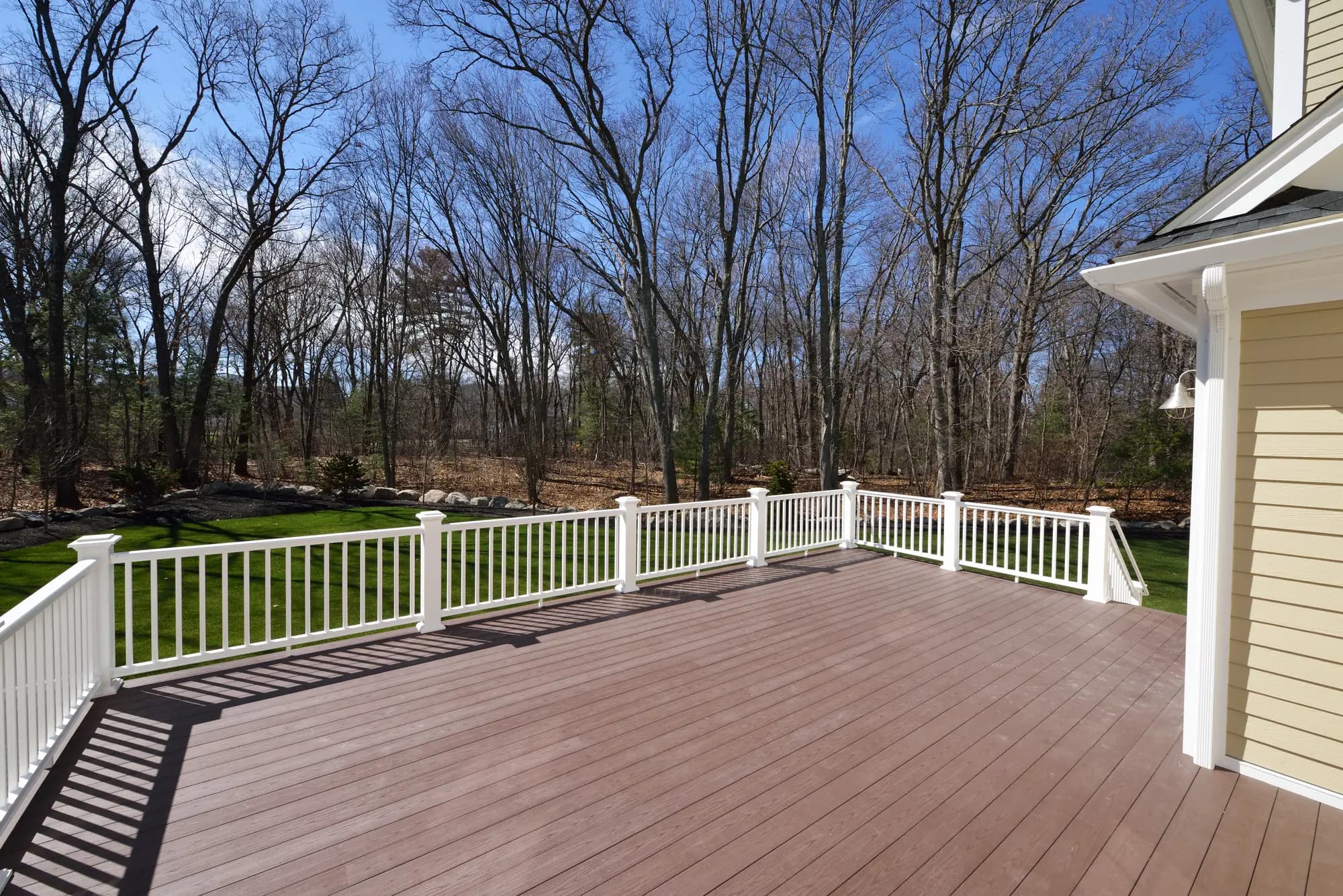
Esko sits on rolling, wooded terrain where grade changes across a single lot are the norm rather than the exception. That is exactly the condition an elevated deck is built for: it turns ground that was unusable into living space without the cost of regrading, and on a wooded lot it often captures a view as well.
Frost depth is the first constraint
Footings here have to reach below the frost line, which generally means 60 inches or more. A footing that stops short will heave every winter and settle every spring. That movement racks the frame, opens the ledger connection and eventually makes the structure unsafe rather than merely uneven. Local code and inspection govern the actual depth, and the inspection happens before anything is covered, which is when it is useful.
The ledger is where decks fail
The ledger is the board attaching the deck to the house, and it is the single most common point of catastrophic deck failure. It has to be fastened into solid framing with the correct hardware and flashed so water cannot get behind it. A ledger nailed to sheathing with no flashing rots the rim joist quietly for years, then lets go all at once, usually with people standing on it.
Building to the slope, not around it
Steeper grades mean taller posts, and taller posts mean lateral bracing and larger footings. That gets designed from the lot's actual grade rather than adapted from a standard plan afterwards. Walkout basements, common around Esko, add another connection point that has to be detailed rather than improvised.
Surface material is the smallest decision
Pressure-treated lumber is the value option and performs well when maintained, though the sealing season here is short. Composite costs more up front and removes the annual sealing entirely. Cedar is naturally rot-resistant and attractive but marks more easily. None of it changes how long the deck lasts. The framing underneath decides that.
Related
- Deck Construction
Custom decks engineered for sloped lots, frost depth and seasonal movement.
- All services in Esko, MN
Sloped, wooded lots where deck and drainage design carry the project.