A roof in Duluth is not asked to do the same job as a roof three hundred miles south. It carries the weight of accumulated snow for months at a time, sheds meltwater that refreezes at the eaves, and takes wind off Lake Superior that drives rain sideways under anything poorly lapped. Installation methods that are adequate elsewhere fail here, and they usually fail at the same three places.
Snow load is a structural question, not a material one
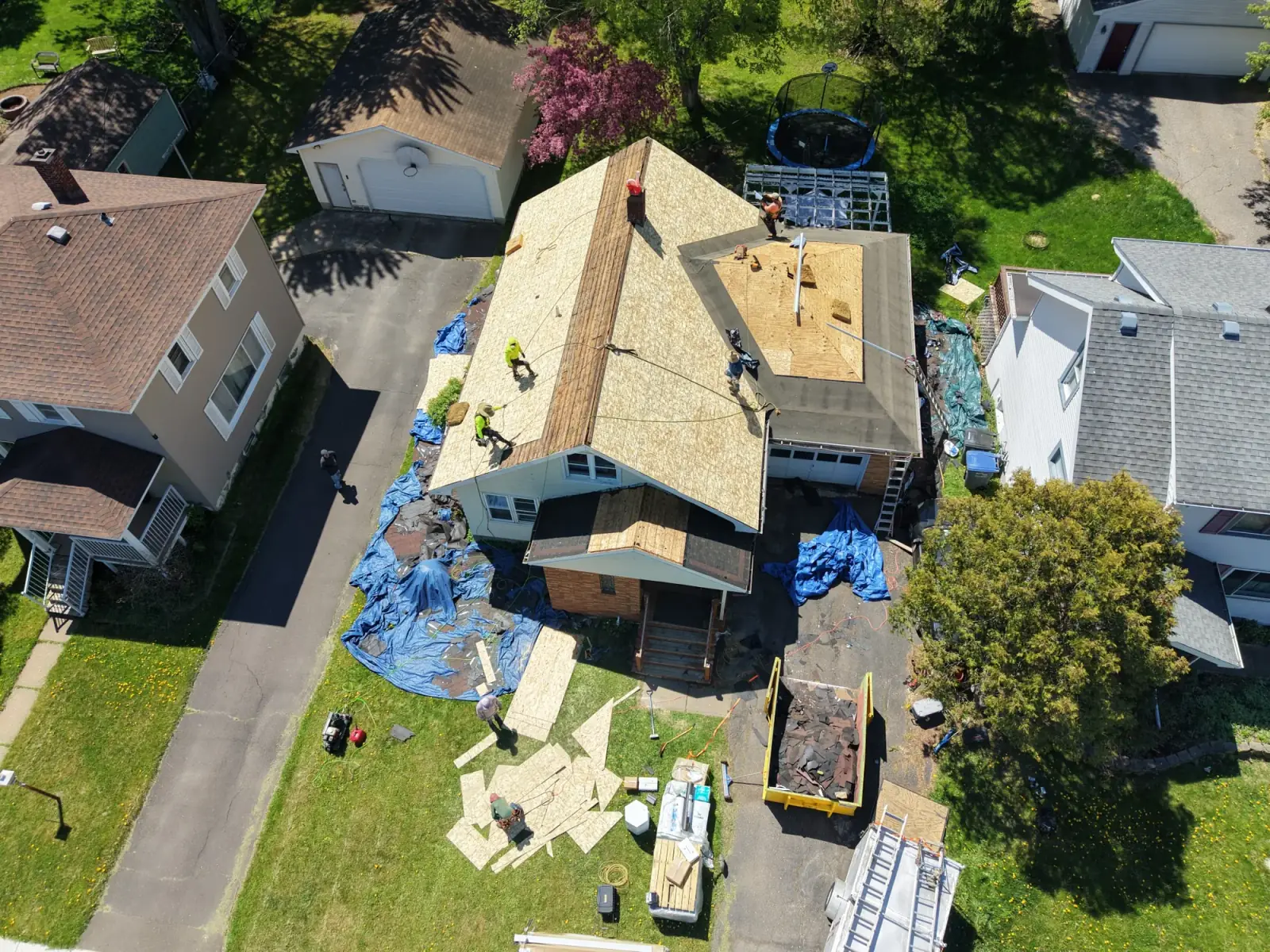
Heavy snowfall is the most visible pressure on a Duluth roof, but the shingle is rarely what gives way. What matters is the deck underneath, the fastening pattern holding everything down, and whether the structure was built for the load it is now carrying. During a tear-off the deck gets inspected properly for the first time in decades, and on older hillside homes that inspection routinely turns up sheathing that has been quietly soft for years.
Ice dams are an attic problem wearing a roof costume
An ice dam forms when heat escaping into the attic melts snow on the upper roof. That meltwater runs down to the cold eave, refreezes, and builds a ridge of ice that backs the next round of water up under the shingles. Replacing the roof without addressing the cause gives you a new roof with the same problem.
The fix is balanced ventilation, intake at the soffit and exhaust at the ridge, so the attic runs cold and dry. Ice and water shield along the eaves and through the valleys is the backup layer for when conditions beat the ventilation anyway.
Wind uplift starts at the edges
Wind does not lift a roof from the middle. It catches an edge, at a rake, a ridge or a corner, and works from there. Fastening patterns rated for high wind and correctly nailed shingles are what keep that first edge down. This matters most on exposed lots and along the ridge above the city, where there is little to break the northwest wind.
What a properly installed roof looks like afterwards
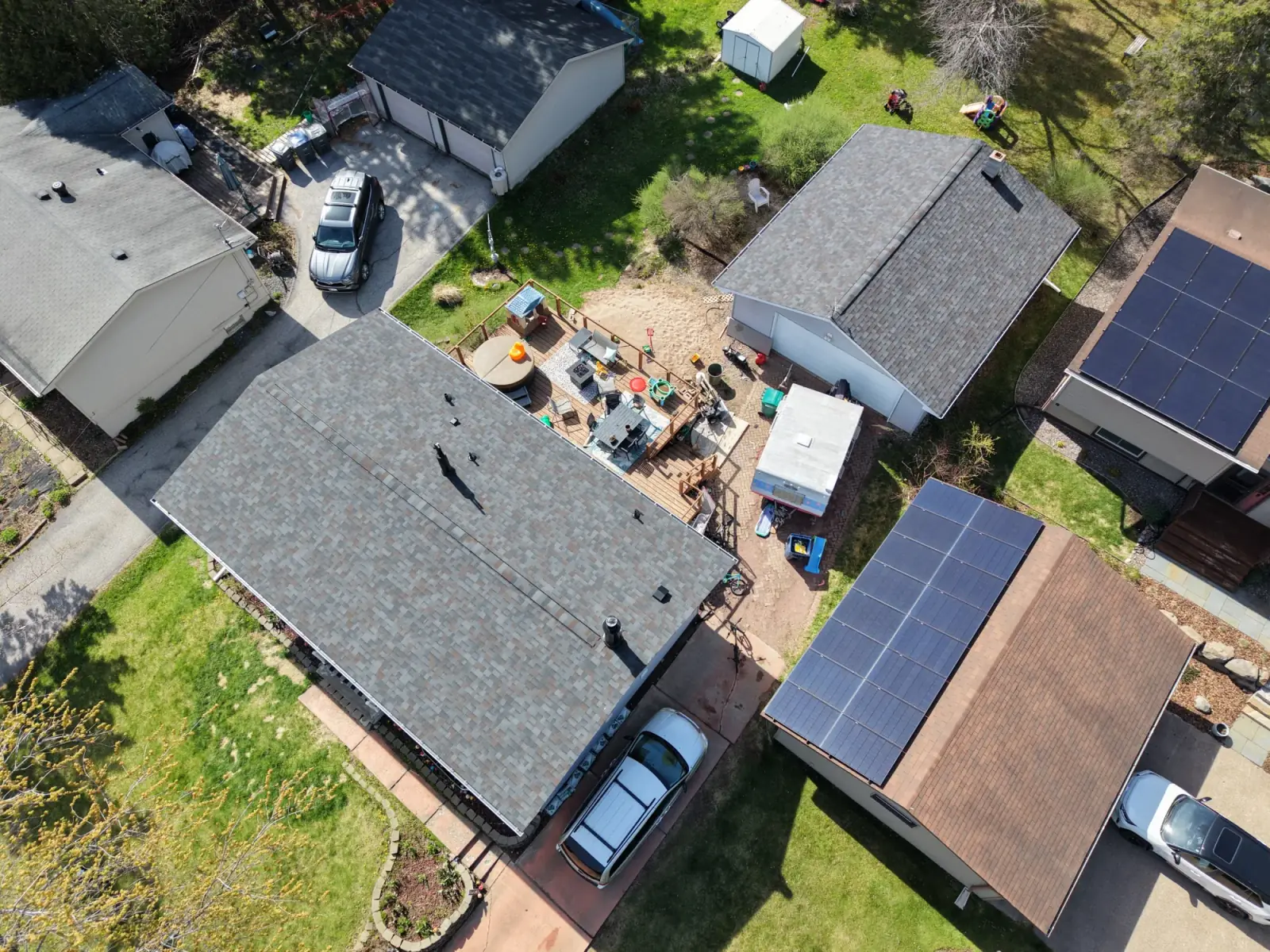
Water drains cleanly rather than pooling behind fasteners. Snow sheds predictably instead of building at one plane. There are no lifted edges for wind to catch, the attic stays dry through a thaw, and interior ceilings stop showing the stains that started the conversation.
Related
- Roofing
Full roof replacement built for heavy snow load, ice dams and freeze-thaw cycles.
- All services in Duluth, MN
Steep lots, exposed hillsides and some of the oldest housing stock in the region.