Hermantown sits high enough and far enough from Lake Superior to lose the lake's moderating effect. Winter lows run colder than the lakeshore and snowfall accumulates rather than melting between thaws. For siding, that means more freeze-thaw cycling driven through the wall assembly and more sustained exposure on open lots with little to break the wind.
What fails first
Much of Hermantown's housing stock dates from the 1970s onward, and a good deal of it still wears its original builder-grade siding. That material is now well past its service life. The failures show up in a predictable order: paint that will not hold, boards cupping away from the sheathing, cracks at fastener heads, and soft spots where water has been getting behind the cladding at an unflashed opening.
The barrier behind the boards
Siding is not a waterproof layer and was never meant to be. It is the first line, and it is expected to let some water past. The weather-resistant barrier behind it is what keeps that water out of the sheathing, and it is only as good as the flashing that ties it together at every window, door and penetration.
That is why a siding project starts with a full tear-off and an honest look at the sheathing. Covering damaged sheathing traps the moisture that caused it, and the new siding will not hold to soft material anyway.
Materials that suit the climate
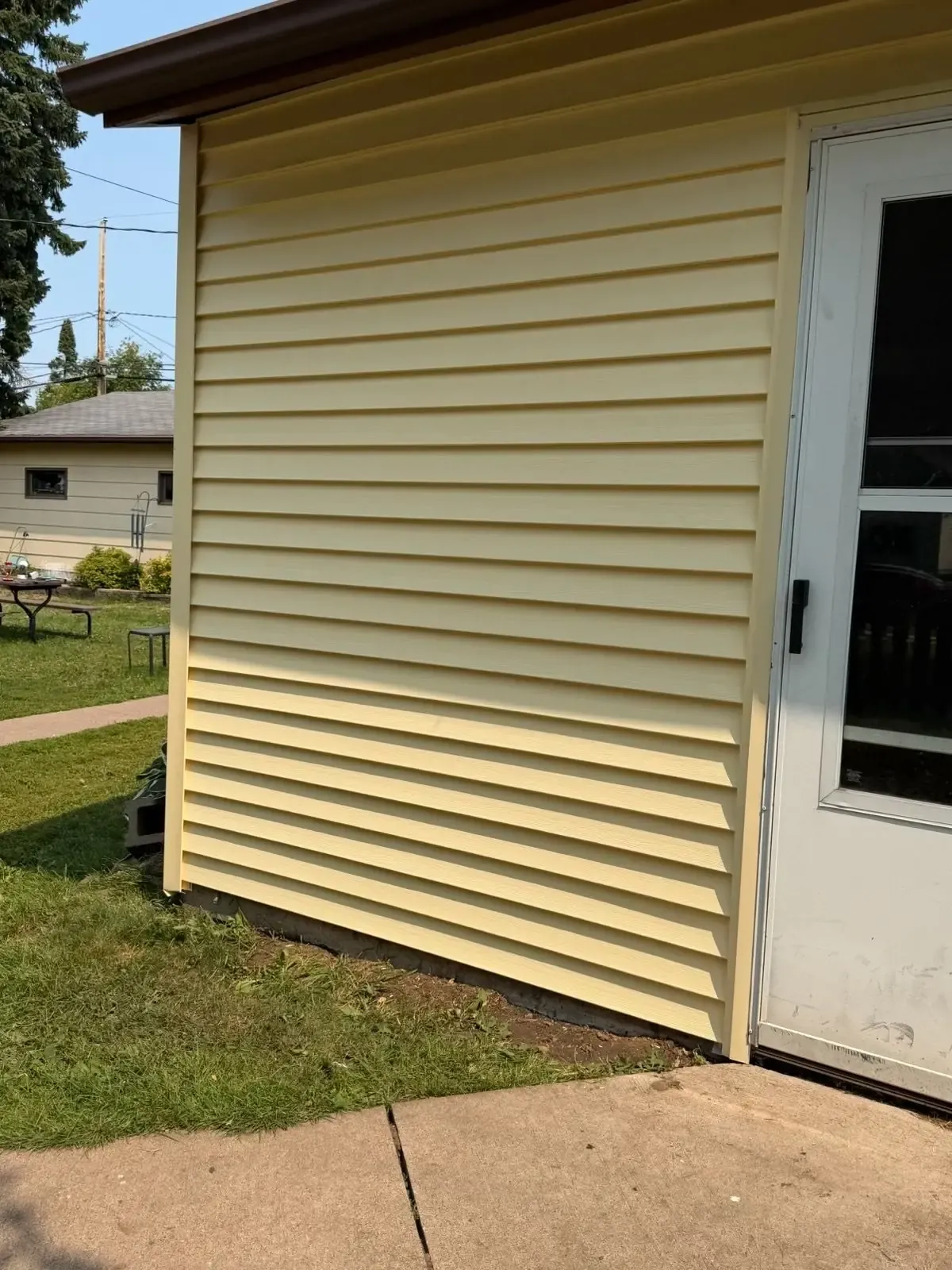
Engineered wood and fiber cement both handle freeze-thaw cycling well and hold paint far longer than traditional wood. Vinyl is the budget option and performs acceptably when installed correctly, though it becomes brittle in deep cold and is more prone to impact damage from hail or a stray branch.
The insulation opportunity
A tear-off is the only practical moment to improve the wall's thermal performance. Insulated siding panels or a layer of rigid foam over the sheathing both help, and doing it during a project that was happening anyway costs a fraction of doing it later.
Related
- Siding Installation
LP SmartSide and fiber cement siding that seals out drafts and resists freeze-thaw warping.
- All services in Hermantown, MN
Higher elevation, heavier snowfall and newer construction than the lakefront.